
How to Start Your Boxing Gear Brand?

Are you tired of watching others succeed in the boxing gear market while wondering how you could start your own brand? Imagine creating boxing gloves, wraps, and protective gear that fighters love while building a business that reflects your passion for combat sports. Starting your own boxing gear brand is not just a dream; it is possible, and this guide will show you exactly how to make it happen.
Whether you are a fighter, trainer, or fitness enthusiast, this step-by-step guide will take you through everything from market research and product development to branding, marketing, and growing your business. By the end, you will know how to launch a trusted boxing equipment brand that athletes and gyms can rely on.
Understand Your Market
Before you spend money on gear or a website, you need to know the market inside out.
- Study the competition: Look at top brands like Everlast, Venum, Hayabusa, and smaller niche brands. Notice their prices, product features, marketing style, and customer reviews. Think about what they do well and what they miss.
- Understand your customers: Beginners often want affordable and simple gear. Professionals prioritize performance and durability. Fitness enthusiasts look for stylish gear that fits their workouts.
- Identify market gaps: Ask yourself: Are there products that are hard to find? Can you create something better, safer, or more stylish?
You can visit gyms, watch training videos, check online forums, and run surveys to understand what people want. The more you know, the better you can design products that sell and meet real needs.
Know Who You Are Selling To
Your audience is the heart of your boxing gear brand. Understanding who you’re selling to will guide every decision, from the types of products you offer to how you price and market them.
Key Customer Segments
- Beginners: People just starting boxing or fitness training who want easy-to-use, safe, and affordable gear.
- Professional fighters: Athletes who demand high-quality, durable, and performance-driven equipment.
- Youth and women: Often overlooked segments with specific sizing, design, or style preferences.
- Gyms and training centers: These buyers often purchase in bulk and value consistent quality and reliability.
What Your Customers Want
- Do they prioritize comfort, durability, or performance?
- Are they looking for stylish gear, or are they focused on value for money?
- Do they care about eco-friendly materials or premium finishes?
How Your Customers Shop
- Online buyers value convenience, product descriptions, and reviews.
- Gym or retail buyers like to see and try gear before purchasing.
When you clearly understand your audience, you can customize your boxing products and marketing messages to meet their needs. For instance, if you’re targeting beginners, emphasize safety, comfort, and ease of use. If you’re targeting professional fighters, highlight durability, performance, and advanced features.
Get Gear That Aligns With Your Customers’ Needs
Get the boxing gear that aligns with your customers’ needs. Pair that strategy with a reliable supplier, and you can create a brand for long-term success. Take the next step to bring your vision to life.
Start Your Brand JourneyFeatured Products
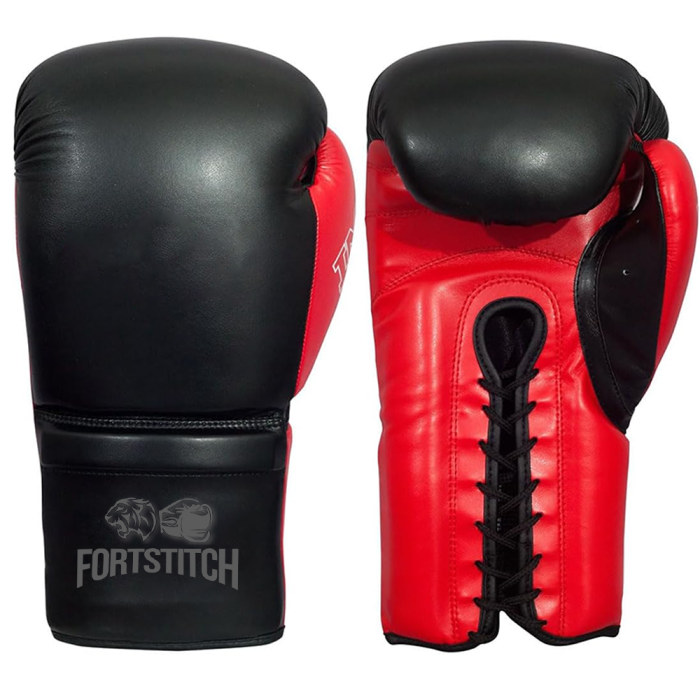
Create a Strong Business Plan
A clear business plan acts as a roadmap for your brand and helps you avoid mistakes.
The Legal and Financial Foundation
The fun part is designing gear. The boring part is what keeps you safe. Don’t skip it.
- Form an LLC: This keeps your personal money and belongings safe if something goes wrong. It costs around $100 to $800 to set up.
- Get product liability insurance: This protects you if your gear hurts someone. It costs about $500 to $1,500 per year. Don’t sell anything without it.
- Learn the safety rules: Different countries have different safety rules for sports gear. Check what your target country requires before you order anything.
- Trademark your brand name: This stops other people from using your brand name. Pay $250 to $350 to lock it in. Do this before you print your logo on hundreds of gloves.
- Know your real costs: Starting a boxing gear brand usually costs between $4,000 and $15,000. This covers samples, production, shipping, packaging, website, insurance, and marketing.
Design Your Market Plan
- Mission and vision: Why are you starting your boxing gear brand? What do you want to achieve?
- Products: Start with essentials like boxing gloves, hand wraps, and protective gear. Later, expand into punching bags, apparel, or accessories.
- Pricing strategy: Consider retail prices, wholesale boxing supplier rates, and bundle deals. Make sure your pricing matches the quality and target audience.
- Sales channels: Will you sell online, in stores, or both? Each has benefits. Online allows a wider reach, while stores build trust locally.
- Marketing plan: Plan pre-launch campaigns, social media content, influencer partnerships, and paid ads.
- Financial forecast: Estimate costs for production, marketing, shipping, and operations. Plan for at least six months of expenses.
A strong plan will help you stay organized, attract investors, and make confident business decisions.
Test Your Idea and Plan Funding
Even before producing large quantities, you should validate your idea.
- Run surveys and polls: Ask your potential customers what they want in boxing gear. What size, material, or style do they prefer?
- Offer pre-orders: Launch a landing page or social media campaign where people can buy in advance. This helps measure interest.
- Start small: Produce a limited batch of products to test the market. Get feedback on design, comfort, and durability.
- Plan your funding: Use personal savings, loans, crowdfunding, or investors to finance your launch. Make sure you know exactly how much you need for production, marketing, and operations.
By testing first, you reduce risk and improve your products based on real feedback.
Product Development and Quality
Your products are the foundation of your brand’s reputation. Good products lead to repeat customers and strong word-of-mouth.
Choose Manufacturing Options: ODM, OEM, and Private Label
Factories will use these three words. Each one means a different level of cost and control. Know the difference before you choose.
Design and Test Your Gear
- Design with detail: Create technical specifications for each product, including size charts, materials, stitching, padding, and logo placement.
- Test the gear: Send samples to trainers, athletes, or gyms. Ask them to use it in real training sessions and provide feedback.
- Choose the right materials: Leather, synthetic fabrics, and foam padding all affect durability, comfort, and performance. Consider moisture-wicking and breathable fabrics for wraps and gloves.
- Ensure safety standards: Protective gear like gloves, headgear, and shin guards must meet safety regulations.
Build Your Brand on a Foundation That Performs
You need boxing gear that your customers can believe in — high-quality and well-tested products built to perform. The right supplier is the foundation of your reputation. Check our collection to start building your brand.
Check Our CollectionFeatured Products
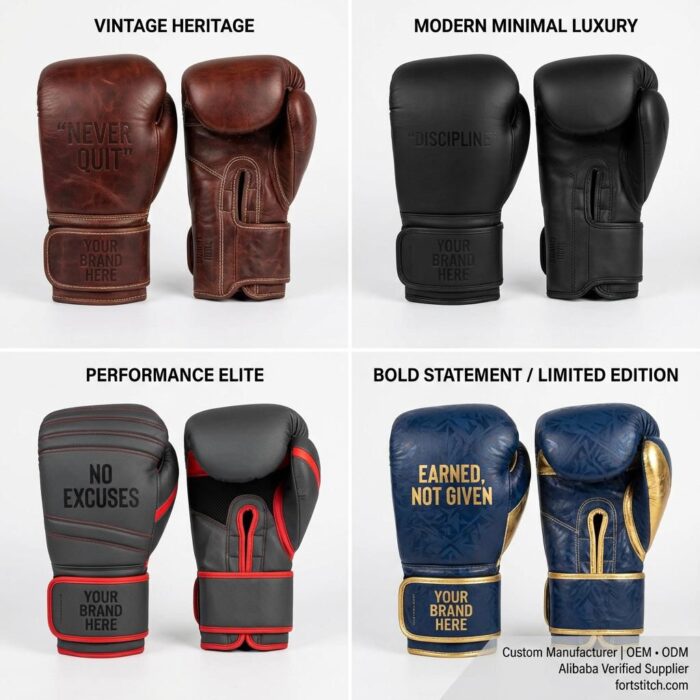
Work With Reliable Suppliers
Suppliers play a critical role in your success.
- Research suppliers: Compare local and international boxing gear manufacturers, read reviews, and ask for references.
- Negotiate terms: Minimum order quantity, pricing, and delivery timelines should be agreed upon upfront.
- Manage inventory: Track stock levels to avoid shortages or overstocking.
- Plan logistics: Decide whether you will handle shipping in-house, use dropshipping, or hire a third-party logistics company.
Sampling For The Products
Sampling is a very important step in production. Golden rules of sampling:
- Never approve a sample you haven’t physically held and used yourself or had a trusted fighter test for you.
- Factor sample shipping into your budget. DHL or FedEx from major manufacturing hubs runs $50 to $100 per shipment.
- Be specific with feedback. “Make the padding softer” helps no one. “Reduce foam density in the knuckle area by roughly 20 percent, aiming for a feel closer to Brand X’s training glove” actually helps.
Strong supplier relationships ensure you consistently deliver quality products on time. Also, for other gear like boxing punching bags, MMA gears, and body protectors, a trusted supplier is equally important.
Build Your Brand Identity
Your brand is what people remember and trust.
- Name and logo: Make them bold, memorable, and related to boxing or combat sports.
- Storytelling: Share your journey, passion, or reason for starting the brand. People love connecting with authentic stories.
- Visual style: Use consistent colors, fonts, and designs across your website, social media, and packaging.
- Unique selling point: Decide what makes your gear different — eco-friendly materials, premium quality, or affordable starter kits.
A strong brand sets you apart in a crowded market and helps customers feel connected to your business.
Marketing Your Boxing Gear
Marketing helps your brand reach the right people and build trust.
- Content marketing: Write blogs, share training tips, or post videos about gear care and workouts.
- Social media: Show product demos, training routines, and customer stories on Instagram, TikTok, or YouTube.
- Influencer partnerships: Collaborate with trainers, fighters, or gyms to expand your reach.
- Email campaigns: Send updates, special offers, and training tips to keep your audience engaged.
- Paid ads: Use targeted ads to reach the customers who are most likely to buy your products.
Your marketing strategy should educate, engage, and encourage customers to try your products.
Choose How to Sell
Deciding where and how to sell affects your growth and brand perception.
- Direct-to-consumer: Selling on your own website gives you control and higher profit margins.
- Marketplaces: Platforms like Amazon, eBay, and niche sports stores increase visibility.
- Gyms and retail stores: Partner with gyms to sell in bulk and build local credibility.
- Launch strategy: Create excitement with early bird deals, giveaways, and promotions.
A well-planned sales strategy ensures your products reach the right audience and your brand gets noticed.
Measure, Improve, and Scale
Even after launch, you need to keep improving your brand.
- Track metrics like sales, customer acquisition cost, returns, and website traffic.
- Gather customer feedback to improve products and service.
- Expand your product line gradually: headgear, punching bags, apparel, or accessories.
- Engage with your community: sponsor tournaments, run challenges, or collaborate with gyms.
Continuous improvement helps your brand stay relevant, grow, and build loyalty.
Legal, Safety, and Compliance
Protect your business and customers.
- Register your business and trademark your brand.
- Ensure all products meet safety standards.
- Use contracts for suppliers, retailers, and partners.
- Consider insurance to protect against product liability.
Following the law helps you avoid problems and gain customer trust.
Avoid Common Mistakes
Many new brands make preventable mistakes:
- Ordering too much inventory before testing demand.
- Compromising on product quality.
- Expanding too fast without understanding customers.
- Ignoring legal and safety requirements.
Red Flags: Signs a Manufacturer Might Be in Trouble
FortStitch: Your Complete Manufacturing Partner
You don’t need to handle all manufacturing alone. FortStitch is a reputed brand at the global level that knows how to turn ideas into real products. We provide an end-to-end solution from sourcing raw materials to packing and shipping. Whether you want ODM products or OEM custom gear, we can do it. We have experience working with combat sports brands and meeting international standards. We provide the best terms for small businesses and startups.
Stop Planning. Start Building.
If you’re ready to take the next step, FortStitch is here to make it happen. The right supplier is more than a manufacturer. If you are serious about creating a brand, this is the time to take action.
Let’s ConnectFeatured Products

Conclusion
Starting a boxing gear brand is exciting and rewarding. By researching your market, creating high-quality products, building a strong brand, marketing effectively, and improving constantly, you can create a trusted name in combat sports.
Take it step by step, listen to your customers, and focus on quality and consistency. Your brand can inspire athletes, gyms, and fitness enthusiasts while growing into a successful business.
FAQs
Q1. How do I start a boxing equipment store or martial arts retail business?
Research your market first. Then pick your niche, find reliable suppliers, set up your online store or physical shop, get insurance, and build relationships with local gyms to bring in early customers.
Q2. What products should a boxing and MMA equipment store stock to succeed?
Start with essentials like gloves, hand wraps, and shin guards. Add focus mitts, headgear, and mouthguards. Later expand into apparel, punching bags, and accessories once you know what your customers want most.
Q3. Is it profitable to open an MMA gear store or a boxing supply store?
Yes, but profits take time. Margins range from 25 to 50 percent per item. Success depends on finding the right suppliers, building gym partnerships, and keeping repeat customers. Most stores break even in year two.
Q4. What is the current size of the mixed martial arts equipment market?
The global MMA equipment market is worth over 1 billion dollars and growing. More people joining combat sports for fitness is driving demand. North America and Europe are the biggest markets right now.
Q5. How do I choose the best MMA equipment brands for my store?
Look for brands with good reviews, fair wholesale prices, and reliable shipping. Test samples yourself. Choose a mix of trusted names and smaller brands that offer something unique to stand out from competitors.