
Guide to Compression Garments Manufacturing For Startups

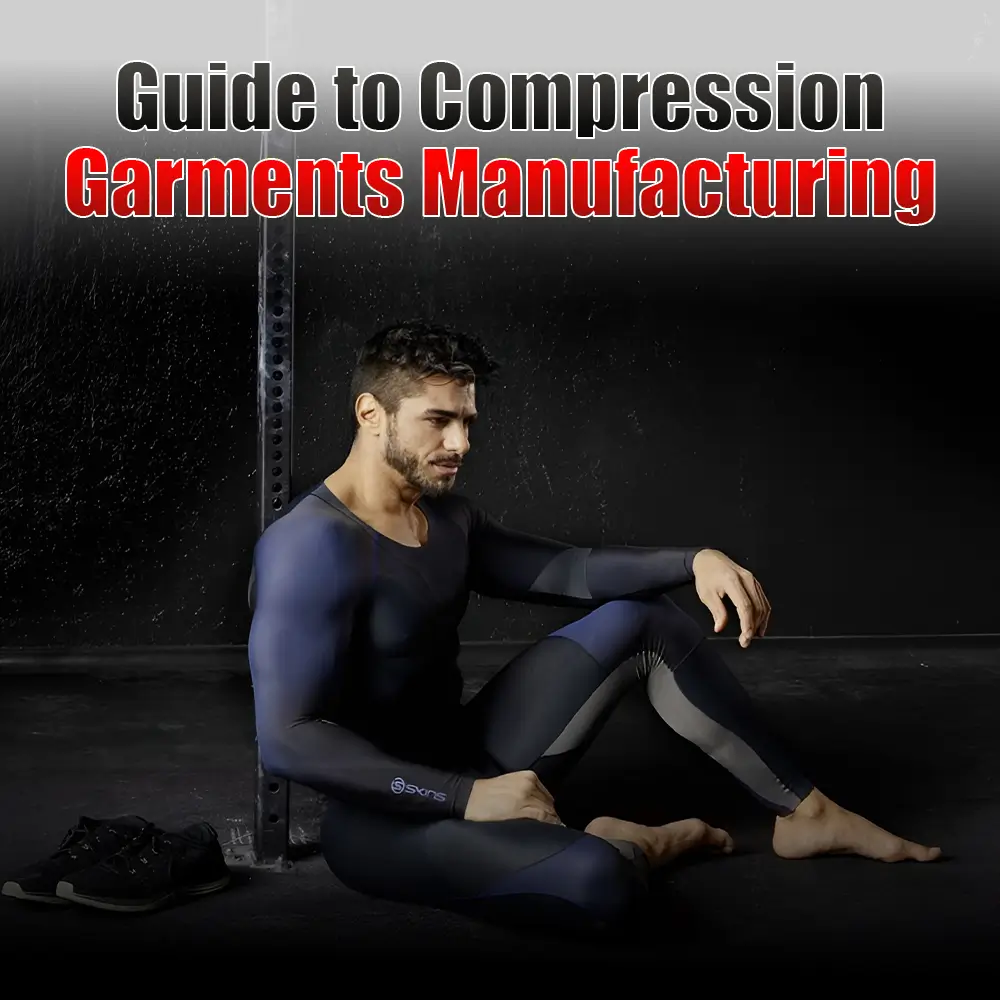
Compression garments are the top-of-the-list option for athletes. You can see them everywhere in everyday life. From surgery to a big game, they help heal muscles faster. Because so many people want these products. There are so many brands emerging in the market.
Everyone wants a special line. But it is not easy to make a good compression garment. A reliable manufacturer is what you need for your brand. And finding the right one is not easy. The market is full of quality claims, but everyone cannot promise. At the end of the reading, you will know how to choose your manufacturer.
The Science and Technology of Compression Garments Manufacturing
1. Material Science: Choosing the Right Fibers
The fabric used in the manufacturing is most important. It decides how the product feels, how long it lasts, and what it can do. Different fabrics are good for different situations. The most common fabric types are.
1. Nylon mixed with Spandex is a very popular choice. Nylon is smooth and strong. Spandex gives it stretch. Together, they hold their shape well.
2. Polyester mixed with Elastane is famous for lasting a long time. It also does a great job pulling sweat away from the skin. This keeps the wearer dry and comfortable.
3. Microfiber is a very tiny thread. This makes the fabric super soft and smooth. It feels gentle against the skin.
4. Powernet is a special type of fabric. It is firm. It provides the most support and shaping. You often find it in shapewear and serious medical compression.
Manufacturing Techniques: Seamless vs. Cut and Sew
The process of making a compression garment is as important as the material. Two main methods are famous to make a compression wear.
1. Seamless Knitting Technology
In this method, a machine knits the whole cloth at once. Like making a sock on a big loom. The garment comes out as a single piece without any stitches or seams. It provides great comfort. Seams and stitches can rub against the skin and create irritation. This makes knitting a top choice for medical use.
2. Cut and Sew
This is the old and traditional method. Pieces are cut out from big rolls of fabric. Then, craftsmen sew all pieces together. Cut and sew gives a lot of freedom for designing. They can use different parts from different fabrics. This method is great for special designs, but it does have seams that some people might feel.
Achieving the Right “Compression Matrix”
Not all compression is the same. How tight a garment is and where it is tight make a big difference in what it does.
1. Gradient Compression
Think about a sock that is really tight around the ankle and gets a little looser as it goes up the leg. That is gradient compression. It helps push blood upward toward the heart. This is very helpful for people with poor blood flow or who stand all day. It is also used after some medical procedures to help with healing and swelling.
2. Targeted Panels
Sometimes you do not want the whole garment to be tight. You only want certain spots. Targeted panels put extra pressure right where you need it. This gives you shaping where you want it and freedom where you need it.
3. Four-Way Stretch
This is a simple but important idea. Four-way stretch means the fabric stretches side to side and up and down. The wearer can move in any direction, and the fabric moves with them. This is key for athletes who need to run and jump.
OEM vs. ODM: What Does Your Business Model Require?
Before you start finalising your manufacturer. Whether it’s compression garments for athletes or medical compression garments. You need to understand your needs and model. This is what your choice depends very much on.
1. The OEM Model
This is what we call Original Equipment Manufacturer. You bring the design of your own, give us specifications, and ideas. We are who will make it from scratch.
- Best for: Brands with an established market. Have their own designs and full control over every detail. You can design custom athletic activewear of your choice.
- The upside: The product is original and your 100%. No other has it. Control and quality made only for you.
- The downside: You have to do the hard work of figuring out the design first. If you make a mistake, it is on you.
2. The ODM Model
This is what we name Original Design Manufacturing. This means the manufacturer has the designs already. You will pick the one you like, and he will make it with your brand name. Or you can ask to tailor the design as per your theme.
- Best for: Startup who are in the initial stage. Entities that don’t know how to design their own. Brands that want to enter the market fast.
- The upside: It saves a lot of time. The factory already knows what they need to do. They have the hard part. You only need to pick colors and a logo.
- The downside: Other brands might be able to pick similar products. You have less control over the design.
5 Non-Negotiables for Choosing a Compression Garments Manufacturer
Choosing a manufacturer for your brand is not a small decision. You cannot pick anyone. You need to get the right answers. The following are five things that you never compromise.
1. Compliance and Certifications
Check if the factory has the record to prove its good work. For medical products, it is compulsory. Ask for certifications like ISO, CE, or FDA. This shows the factory has strict rules. If they have no documents to show or record. It is not worth the risk.
2. Material Sourcing
Check where they source the raw material. How do they maintain the quality? For medical gear, the fabric is safe. Does their fabric have special fibers to stop bacteria? A good manufacturer can get you what you want.
3. Minimum Order Quantities (MOQs)
The lowest number of pieces you can order with them. This is what we say MOQ. Some manufacturers only accept bulk quantities. This puts a lot of money at risk. Check for manufacturers with flexible terms. Starting small will let you test and check the market.
4. Rapid Prototyping
Do they, and how fast will you get the samples? Waiting too long is not worth itto see the products look right. Quick samples mean you can fix problems faster than your competition.
5. Scalability
Always think forward. What will you do when your product takes off? Can they meet and fulfill your demand? A factory that cannot create in bulk will be in a problem when you need thousands. The best partners are the ones who can stick with you from the start all the way to the top.
Future-Proofing Your Product Line
You need to stay informed if you want your brand to stay in the market.
1. The Rise of “Smart” Compression
Imagine clothes that do more than fit and feel good. Imagine clothes that can think. Well, they are coming sooner than you think.
Smart compression garments have tiny electronics built right into the fabric. You cannot see them, and you cannot feel them. But they are there, working for the person wearing the clothes.
Right now, this sounds like science fiction. But it is happening. The technology is getting smaller and cheaper every year. Soon, smart compression will be something customers expect. The brands that get there first will have a big head start.
2. Sustainability as Standard
Not too long ago, being eco-friendly was a nice bonus. It was something extra that made a brand look good. Those days are gone.
Today, customers care about where their clothes come from. They want to know that the people making the products are dealing with justice. They want to know that the materials are not hurting the planet.
Look for factories that use eco-friendly materials. Things like recycled polyester made from old plastic bottles. Or Modal and Tencel, which come from trees grown in special forests. These materials feel great and make customers feel good about what they buy.
3. Hyper-Personalization via 3D Tech
Have you ever bought something online and wished it fit a little better? Most people have. In the future, that problem will go away.
New technology is making it possible to create clothes that fit one person and one person only. No more small, medium, and large. No more guessing. A perfect fit every time. Not only a sports bra, or a hoodie.
The future of compression wear is smart, green, and made for you. The brands that pay attention to these trends today will be the ones leading the market tomorrow.
Conclusion
Starting a compression garments brand is exciting. There are too many opportunities in the market. But it’s not possible to walk alone. A reliable, trusted partner is what you need to start and reach the end. From an idea to becoming a real product. Your happy customers have always hoped it would. Contact us and tell us about your idea. Let’s build something great.