
Weightlifting Belts Explained: Neoprene vs. Leather Contour vs. Lever Belts

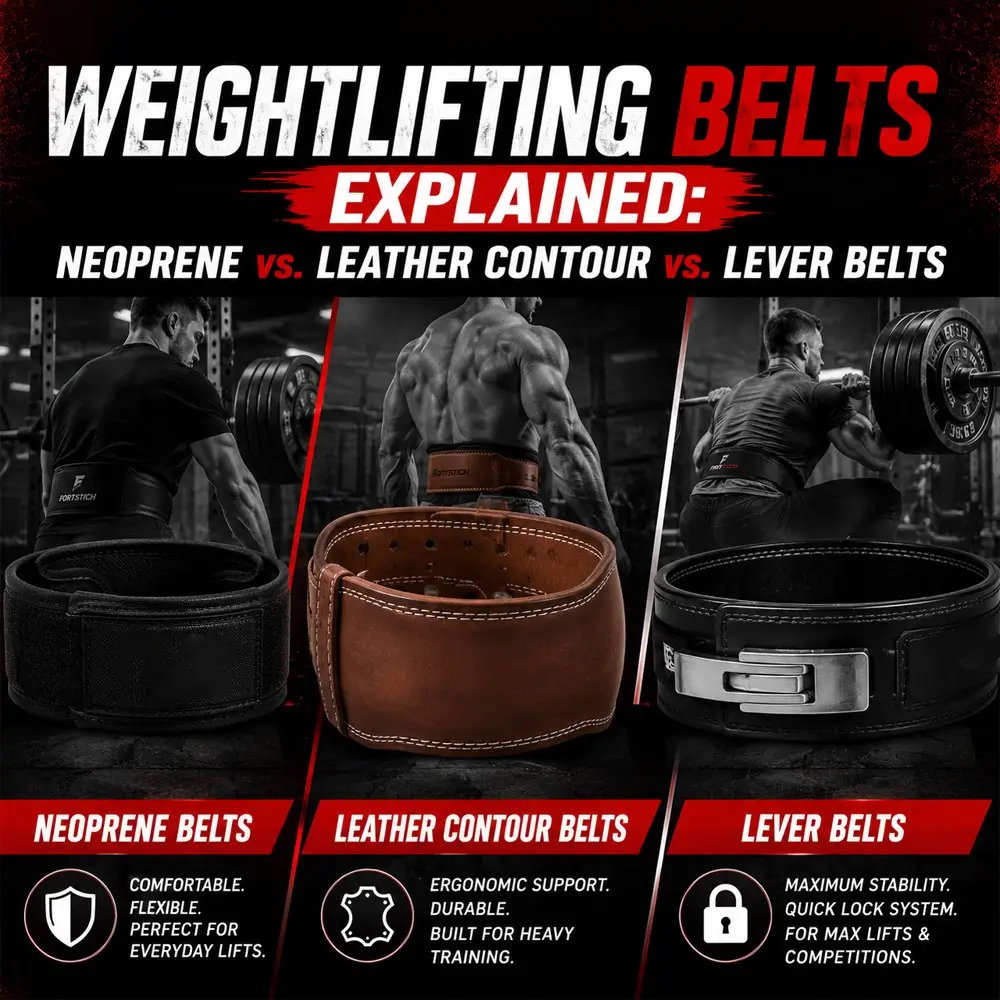
On my first day at the gym, I looked around. I saw people wearing belts when they squat, deadlift, or press overhead. But what I realized is that not all the belts are the same. Some are thick and stiff. While others are flexible and soft. And one buckles up.
When you have so many options, it can feel confusing. This is what you are going to learn. We are going to find an answer to the debate: neoprene vs. leather contour vs. lever belts. Learn the difference and know which one fits you the best.
What Does a Weightlifting Belt Actually Do?
A weightlifting belt does not lift the weight for you. It gives your core something to push against. When you take a big breath and tighten your stomach, the belt adds pressure around your midsection. That helps your spine stay stable. More stability usually means you can lift more safely.
Think of it like a wall behind your back. The belt does not do the work. Your muscles do. But the belt makes the work feel more secure.
Different weightlifting belts are common in weight training, CrossFit, and general strength work. They are not magic. You still need good form. But a well-chosen belt can help you brace harder and feel more locked in.
Quality Weightlifting Belts for Retailers and Private Labels
Looking for quality weightlifting belts for your store or private label line? Explore the full range. We help brands and retailers stock belts that customers trust.
Browse Our CollectionShop Weightlifting Belts
Why Belt Material Matters?
The material of a belt changes how it feels, how long it lasts, and how easy it is to put on. Some belts break in like a pair of boots. Others are ready to use on day one. Some are easy to pack in a gym bag. Others are bulky but supportive.
For retailers and wholesale buyers, material also matters. They affect price, shipping weight, and customer appeal. A buyer looking for a first belt may want something soft and simple. A serious lifter may want thick leather and a mechanical buckle.
Let’s look at the three main options.
Neoprene Belts
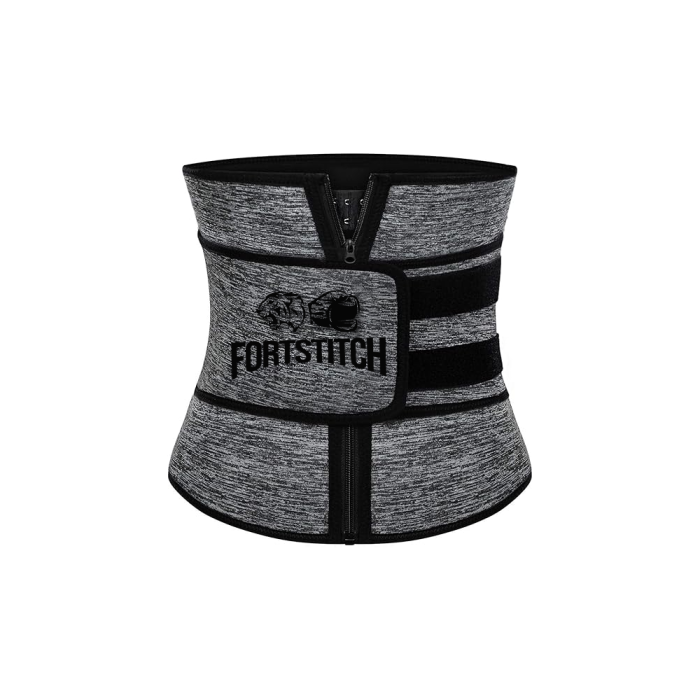
Neoprene is a type of synthetic rubber. You often see it in wetsuits, knee sleeves, and laptop cases. It is flexible, light, and water-resistant.
A neoprene weightlifting belt usually has a wide back panel and a narrower front section. It closes with a Velcro strap. Some models have a simple clasp. Others wrap around and stick.
Who Likes Neoprene Belts?
Neoprene belts are popular with CrossFit athletes, functional fitness users, and people who move fast between exercises. They are also a common choice for beginners who want a little support without the bulk.
These belts work well for workouts that mix lifting with running, jumping, or bodyweight movements. You can keep the belt on during a workout without feeling restricted.
- Light and easy to pack
- Comfortable from the first use
- Easy to adjust with Velcro
- Good for high-rep workouts
- Affordable for most buyers
- Less rigid than thick leather
- Velcro can wear out over time
- Not ideal for very heavy one-rep lifts
- May shift during max-effort squats or deadlifts
Leather Contour Belts
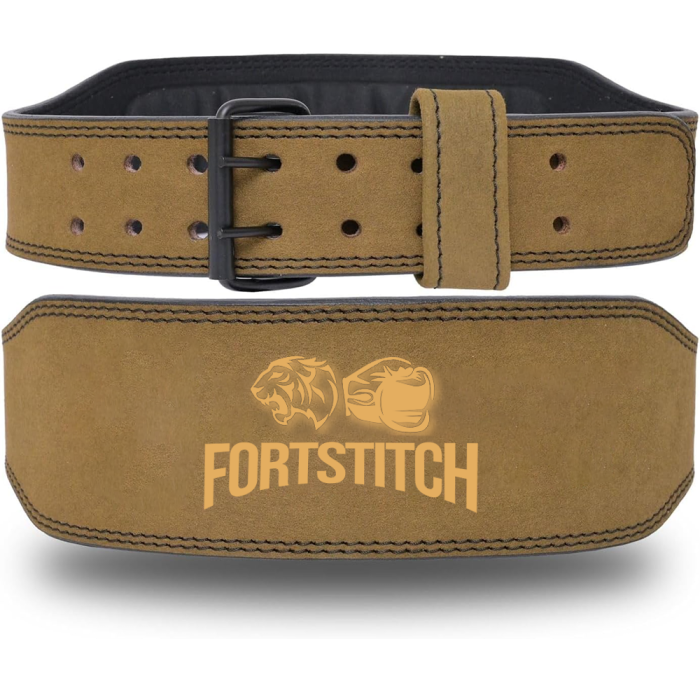
Leather contour belts are what many people picture when they think of a lifting belt. They feature thick cowhide or suede. The belt is usually four inches wide all the way around. Some have taping on the front. The phrase “contour” often refers to a belt shaped to fit the body’s curve more naturally.
Most leather contour belts close with a prong buckle. That is the same style you see on a regular belt, but bigger and stronger. Some use a single prong. Others use two prongs for extra security.
Who Likes Leather Contour Belts?
Powerlifters, strongman athletes, and serious strength trainees reach for leather weightlifting belts. They want strong support on squats, deadlifts, and overhead presses. The stiff leather creates a firm surface to brace against.
These belts need a break-in period. At first, they may feel stiff or dig into your ribs. Over time, the leather molds to your body. A broken-in leather belt feels personal. It becomes a piece of equipment you keep for years.
- Very strong and durable
- Excellent support for heavy lifts
- Molds to the body over time
- Holds its shape under heavy loads
- Classic look and feel
- Takes time to break in
- Less comfortable for fast workouts
- Heavier than neoprene
- Buckle can take effort to tighten
Lever Belts
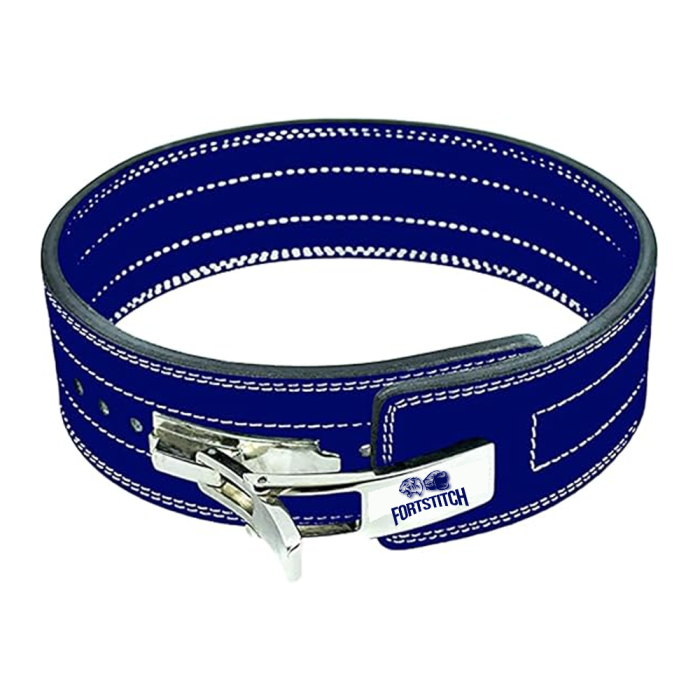
A lever weightlifting belt is a type of leather belt with a mechanical buckle. Instead of threading a prong through holes, you close the belt by pulling a lever. The lever locks the belt into place at a set tightness.
Once you set the lever position, you do not adjust it every time. You only pull the lever shut. To release, you flip the lever open.
Who Likes Lever Belts?
Lever belts are popular with powerlifters who train heavy and often. The lever saves time between sets. You can get the belt on and off in one second. That sounds like a small thing, but it adds up during a long workout.
Lever belts are also useful for lifters who struggle to get a prong belt tight enough. The lever gives a consistent, secure fit every time.
- Fast to put on and take off
- Very secure and tight
- Consistent fit every set
- No fumbling with holes or prongs
- Strong support for max lifts
- Requires a tool to adjust lever position
- Not great if shared with someone else
- Can pinch if not positioned correctly
- Slightly heavier than some prong belts
Weightlifting Belts Explained: Neoprene vs. Leather Contour vs. Lever Side by Side
Here is a quick side-by-side comparison to make the choice easier.
| Feature | Neoprene Belt | Leather Contour Belt | Lever Belt |
|---|---|---|---|
| Feel | Soft and flexible | Stiff at first, then molds | Stiff and firm |
| Support | Light to moderate | High | Very high |
| Break-in time | None | Days to weeks | Days to weeks |
| Best for | CrossFit, beginners, fast workouts | Powerlifting, general strength | Powerlifting, heavy training |
| Price range | Lower | Mid to high | Higher |
| Adjustment | Velcro | Buckle and holes | Lever mechanism |
| Durability | Moderate | High | High |
This table should help you see the main trade-offs. There is no single best belt. The best belt is the one that matches how you train.
FortStitch: Global Manufacturer of Weightlifting Belts
FortStitch is a global manufacturer of weightlifting belts. We serve retailers, wholesalers, and private label brands across the world. You want neoprene belts, leather contour belts, and lever belts in a variety of options every belt passes through strict quality control to ensure durability. You are a startup or brand; you can order a small batch to test the market, or you can place a bulk order to manage your supply and meet your demands. We understand the market and the problems you face every day.
Neoprene, Leather Contour & Lever Belts All Under One Roof
Whether you need neoprene belts for functional fitness, leather contour belts for strength training, or lever belts for serious powerlifters FortStitch delivers quality you can stand behind.
Contact Us for a Free QuoteConclusion
Weightlifting belts are useful tools with a simple but important job. They help you lift heavier and harder with enough safety. Each type serves a different purpose. Neoprene is lightweight. Leather contour is classic and durable. Lever is fast and secure.
For buyers and sellers, the key is to choose the belt as per their needs. A retailer can serve both when the product line is clear and the sizing guide is strong. Precheck your training needs and assess your budget. Then put in the work.
FAQs
Q1. What is the best weightlifting belt for beginners?
A neoprene belt or a thinner leather belt is a good start. These belts are easier to wear and more forgiving while you learn to brace. You can always upgrade later.
Q2. How thick should a leather lifting belt be?
Ten millimeters is a safe choice for most lifters. It offers strong support without feeling overly stiff. Competitive powerlifters often prefer 13mm belts, but they take longer to break in.
Q3. Can you use a neoprene belt for powerlifting?
You can, but it will not provide the same rigidity as thick leather. For heavy singles and max-effort lifts, most powerlifters choose a leather or lever belt.
Q4. How do you adjust a lever belt?
You loosen the screws on the lever, move it to the desired hole, and tighten the screws again. You need a screwdriver or coin. Once set, the belt stays at that tightness.
Q5. Do weightlifting belts prevent injury?
A belt can help support your spine and improve bracing, which may reduce injury risk during heavy lifts. But it does not replace good form. Poor technique with a belt is still poor technique.