
Which Sportswear Products Should New Brands Launch First?

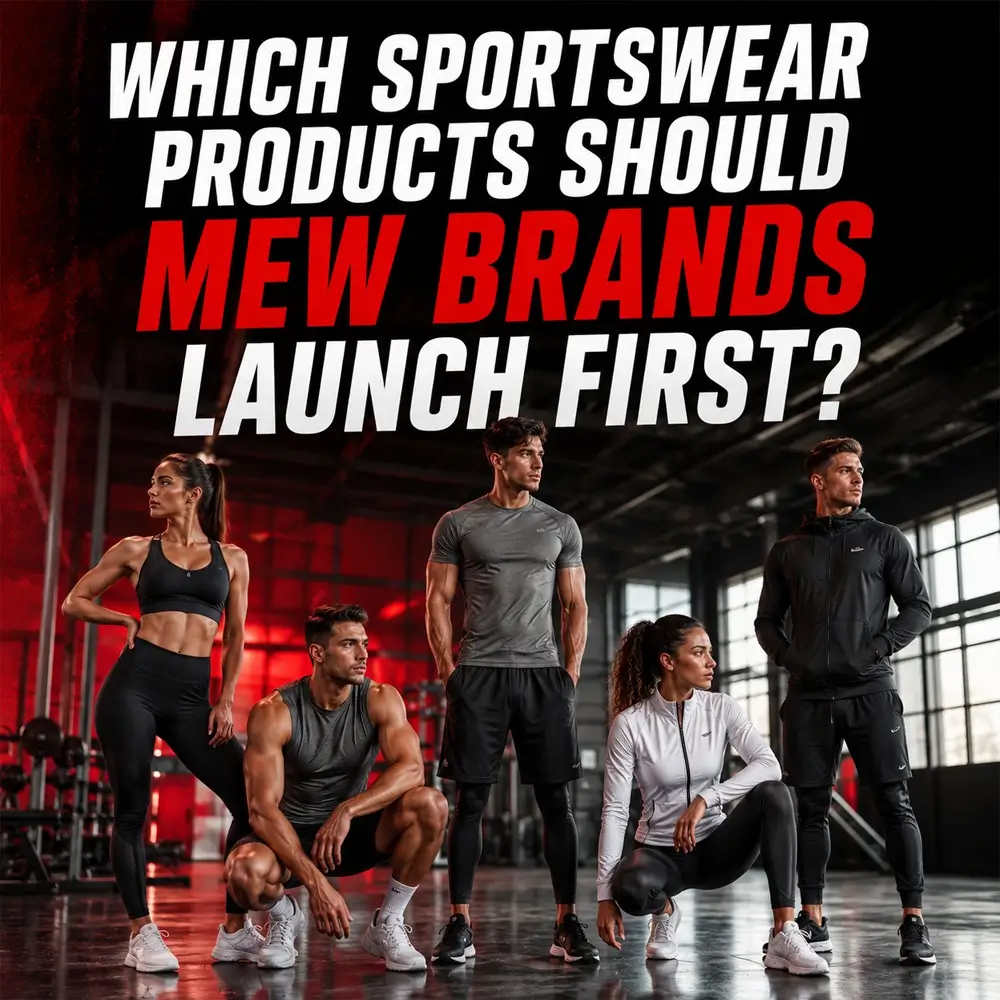
When I was launching my sportswear brand, I was always thinking about the products I should start with. Whether I should choose compression leggings or oversized hoodies. Custom fight wear or uniforms for sportswear. The right choice will build up momentum. Whereas the wrong choice will waste your money and get your inventory stuck.
The answer is simple: winners don’t launch with everything. They launch with a small batch they are good at and provide better value. And keep a deep eye on how people dress today. Let’s learn together which sportswear products to put in the line first.
Why Your First Sportswear Products Make or Break Your Launch?
New brands often try to launch 20 SKUs at once. That instinct is understandable you want to look “complete.” But it’s also the fastest way to drain cash, complicate production, and dilute your brand message.
Your first sportswear products need to do three jobs well:
If a product fails even one of those tests, it shouldn’t be in your first drop. This isn’t about limiting creativity. It’s about giving your brand the best odds of surviving long enough to grow.
The 5 Best Sportswear Products to Launch First
Not all sportswear categories carry the same risk profile. Based on real-world market behavior and manufacturing feedback, these five sportswear products always deliver the strongest starting point especially for new brands targeting the U.S. market.
Performance Leggings
From a production standpoint, leggings are a straightforward product. If you work with a factory that specializes in stretch-activewear stitching, fabrics like nylon-spandex blends with moisture-wicking finishes and four-way stretch give you a premium hand feel without pushing small order quantities into unmanageable territory.
- High-rise waistband with hidden pocket
- Flatlock stitching for durability
- Squat-proof opacity as a baseline standard
Essential Crewneck Tee (Men’s and Women’s)
Choose a midweight jersey around 180–200 GSM with a touch of elastane for shape retention. Avoid thin fabrics that look tired after three washes. This product becomes your canvas for subtle branding like a small chest logo, tonal embroidery, or a back-neck print.
Pullover Hoodie (Unisex Fit)
The key is to avoid over-designing your first hoodie. A clean, oversized unisex profile in brushed-back fleece (around 320–350 GSM) will appeal to a broad audience. You can introduce cropped or graphic-heavy versions in a later drop once you’ve built some traction.
Compression Wear
Launch with two core fits: a slim-tapered cut for a cleaner profile and a relaxed version for the comfort-first buyer. Both styles should use a good-quality French terry fabric that holds structure without feeling stiff.
Medium-Support Sports Bra
A medium-support style with removable cups, a wide underbust band, and a racerback or strappy design give you the most versatility. This product works for yoga, weight training, and daily wear broadening your addressable audience significantly.
Benefit From Patterns That Have Already Solved Fit Complaints
If you’re working with a reputable manufacturer who has deep experience in cut-and-sew activewear, you can benefit from patterns that have already solved common fit complaints. Contact us to get expert guidance for launching your brand.
Contact UsHow to Choose the Right Mix for Your Niche?
Not every brand needs to launch all five categories. The right combination depends on the segment you want to own.
Manufacturing Considerations That Affect Your Product Decisions
Your product selection should account for how sportswear products are actually made not only how they look on a mood board.
How FortStitch Simplifies Your First Sportswear Product Launch?
FortStitch is more than a manufacturer. We’re a product development partner for brands that need to get their first launch right. We work with U.S.-based retailers, wholesalers, and private labels who want sportswear products and clothing line built to spec, delivered on time, and priced for healthy margins.
What that looks like in practice:
- Factory-direct communication: no agent markups, no lost details
- Low early-stage MOQs: practical for testing new styles without overcommitting
- In-house fabric and trim sourcing: helps shorten lead times and keeps quality under one roof
- Pattern and sample support: especially valuable if you’re moving from a concept sketch to a finished sample
- Full custom branding: woven labels, hang tags, packaging, and private-label finishing
We’ve shipped to brands that went on to be stocked in boutique fitness studios, online DTC stores, and multi-brand retailers. The common thread? They started with the right sportswear products, made well.
From Sketches and Tech Packs to Finished Product
If you’ve got sketches, tech packs, or just a clear idea of the sportswear products you want to lead with, we’re ready to help you make them real. Contact us to start a conversation with our team. Let’s build your first collection the right way.
Contact UsConclusion
There is no list of a perfect collection. But yes, there is a smart one focused on sportswear products that customers are already buying. These categories let you produce with confidence and sell with clarity.
Leggings, compression wear, hoodies, sports bras, and t-shirts give you a solid foundation. Your launch doesn’t need to be loud. It needs to be specific. Start with the products that do the hard work of earning trust and revenue. Your expansion must be natural, not a gamble.
FAQs
Q1. What sportswear products have the highest profit margins for new brands?
Leggings and hoodies often deliver the strongest margins because they carry high perceived value while production costs stay manageable, especially when produced with a partner who offers low MOQs and in-house fabric access.
Q2. Should I launch men’s and women’s sportswear at the same time?
It depends on your brand positioning. If you’re building a unisex or lifestyle brand, launching with unisex fits for hoodies, joggers, and tees lets you serve multiple audiences without doubling SKU count. For performance-focused brands, starting with one gender often results in a stronger, more focused identity.
Q3. How many sportswear products should a startup launch with?
We typically recommend three to five styles, each in two to three colorways. This keeps inventory manageable, makes quality control easier, and gives enough variety for a compelling first collection without overwhelming production.
Q4. Is it better to launch seasonal sportswear or year-round essentials?
Year-round essentials almost always win for a first launch. They sell consistently, reduce the pressure of seasonal markdowns, and make it easier to forecast reorders.
Q5. Can FortStitch help with custom packaging and private labeling?
Yes. We support full private-label execution, including custom woven labels, hang tags, poly bags, and packaging design so your product arrives retail-ready.