
Best MMA Gloves Materials & Padding: What’s Inside?

Buying your first pair of the best MMA gloves can be very difficult. Walking into a store or scrolling a website flooded with choices. Different weights, materials, and prices everywhere. You get confused and pick the one that looks cool. But the truth is, good MMA gloves are not only about what looks good.
This article is not only a guide but a cheat sheet. We have broken down the gloves into four main ways people train, from punching the heavy bag to training with a partner. These simple recommendations will give you straight answers. Find the style or even a trusted supplier that matches how you train, and you will be ready to go.
Quick Reference: MMA Glove Types at a Glance
| Training Style | Glove Type | Padding | Finger Style | Best For |
|---|---|---|---|---|
| Heavy Bag Work | Bag Gloves | Firm / IMF | Open finger | Solo striking sessions |
| Partner Sparring | Sparring Gloves | Layered / Soft | Open finger | Protecting training partners |
| Grappling / BJJ | Grappling Gloves | Minimal | Open palm + finger | Clinch, takedowns, submissions |
| Competition | Fight Gloves | Regulation (4–6 oz) | Open finger | Sanctioned bouts only |
| All-Round Training | Hybrid MMA Gloves | Medium layered | Open finger | Mixed striking and grappling |
Why Your Gloves Matter More Than You Think?
Every pair of MMA grappling gloves may seem the same to you. Each one has padding and straps. But this is a complete misunderstanding. The wrong pair of gloves will ruin your training and hurt your hands. The right gloves offer three core benefits.
They prevent hand injuries.
Your hands are very sensitive. They have bones that can break with no effort. Good MMA training gloves have the right padding in the right spots. This keeps your knuckles safe when you hit training mitts and heavy MMA punching bags. Without good padding, you have both your skill and your hands at risk.
They keep your training partners safe.
MMA is a sport where you need sparring partners. If your gloves are too hard or too thin, you can injure other people. You don’t want to give your friend a black eye due to cheaper gloves. Good padding protects both you and your partner.
They stop your gear from falling apart.
Cheap MMA gloves are torn apart fast. The stitching comes loose. The padding goes flat. They also get smelly and get loose after washing. You need a new one after a few months or even weeks. Spending a little more on quality gloves will save you money as they last longer.
The Anatomy of a High-Performance Best MMA Gloves
Before you start learning how to buy personalized MMA gloves for yourself, you need to understand the anatomy of MMA fighting gloves.
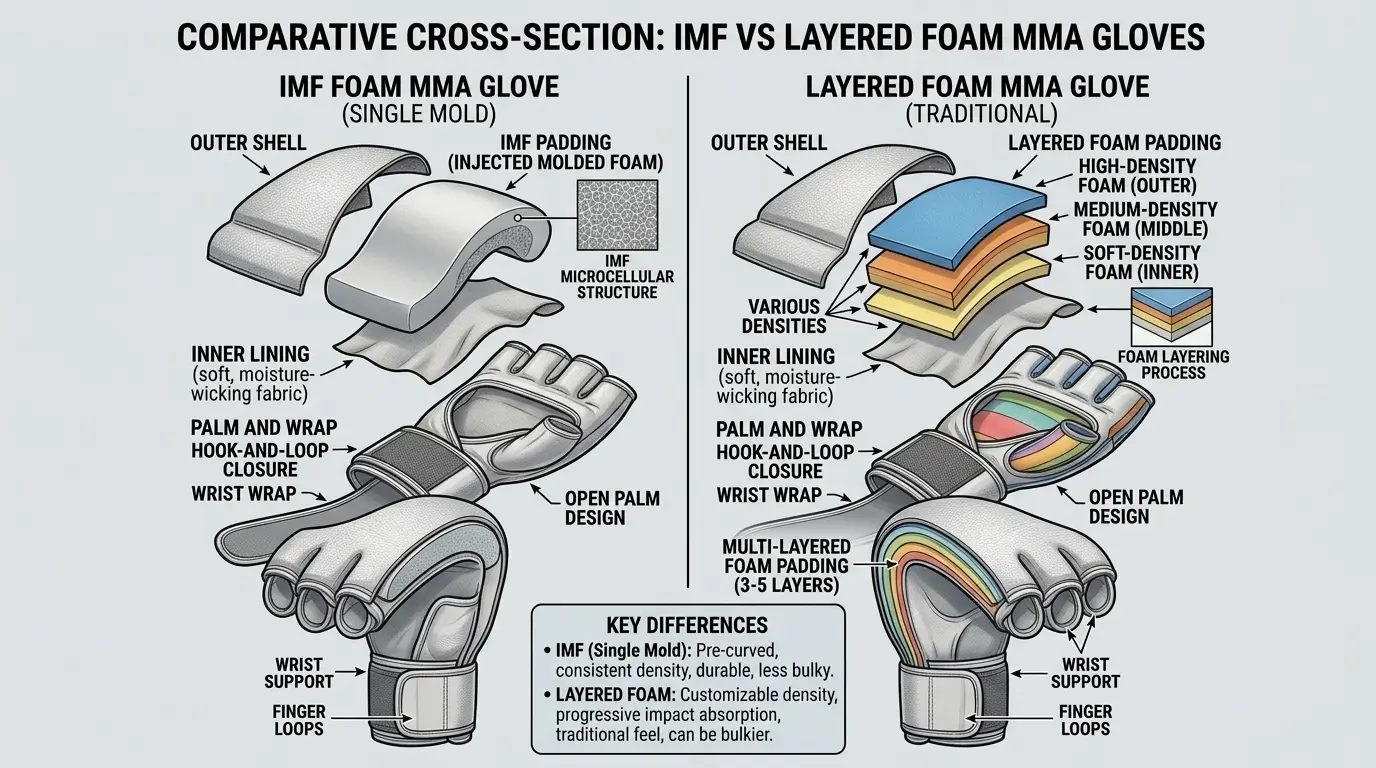
The padding over your knuckle is the most important part. This protects your hand and the target from injury when you punch. There are two main kinds of padding you must know.
Check Our Boxing & MMA Equipment Collection
Check our collection of boxing and MMA equipment to choose the best products for your brand.
Check Our CollectionHow to Choose the Perfect MMA Glove?
Now it’s time to choose the perfect combat sports MMA gloves. The following are simple rules you should never ignore. Whether choosing MMA gloves or MMA gear to start your MMA journey.
Step 1: Define Your Primary Use
First, be real about how you train. Different workouts need different gloves. Picking the right one starts with knowing what you do most.
Need an Experienced & Reputable Supplier?
Contact us today if you need an experienced and reputable supplier to source or manufacture your MMA gloves.
Contact UsStep 2: Get Your Fit Right
This is the part most people mess up. A bad fit means bad performance and more injuries.
Step 3: Match Features to Your Training Frequency
MMA Glove Care: Quick Tips
When buying MMA gloves, good quality is one thing. You need to do more for keeping your gloves in good condition and making them last longer.
- Wipe and air out right after training. Wipe the outside of the glove with a clean, dry cloth. Then open the gloves wide so they can breathe for a few minutes. This helps them dry properly and reduces bacteria build-up.
- Deep clean once a month. Clean your gloves with a mild wet cloth and soap. Wipe both inside and outside carefully. Use newspaper to help them keep their shape while drying. Leave them for a full day to air dry — no heat, no direct sun.
- Use baking soda for smells. To reduce odor, sprinkle a small amount of baking soda inside the gloves and leave it overnight. Shake it out in the morning. For stronger smells, a light vinegar and water spray can help, followed by full air drying.
- Never store gloves in your gym bag. Always let your gloves air out after training. Keeping them in a closed gym bag traps moisture and leads to bad odor and faster damage. Avoid heat and direct sunlight as well.
- Know when to retire them. Look for flat padding that feels hard, torn stitching around fingers or thumb, permanent odor, or Velcro that no longer sticks. These are clear signs it’s time to replace your gloves.
Experts’ Suggestions on Padding and Safety
Padding is not just about how thick the glove feels. Experienced trainers and manufacturers consistently point to the same rules when it comes to protecting your hands and your training partners. Here’s what the experts say.
Conclusion
The most important thing for you to remember is the fit. Not how fancy the gloves look or how expensive they are, but how well they fit your hands. Take the size of your hands before you buy. The right gloves protect your hands and make training better. Now, at this stage, you know what you need.
Go and find your perfect pair.
Browse Our Full MMA Gloves Collection
Check out our full collection of MMA gloves for every style and skill level.
Shop MMA GlovesFAQs
What is the best brand for MMA gloves?
Hayabusa is widely regarded as the top brand, prized for exceptional wrist support, premium leather, and dual-layered padding. Venum and Fairtex are also leading, fight-tested alternatives.
Which gloves are best for MMA?
The best MMA gloves depend on usage. For sparring, Hayabusa T3 or Venum Challenger offer superior knuckle protection. For bag work, Fairtex BGV9 delivers dense, durable shock absorption.
Which gloves do UFC fighters use?
In the Octagon, fighters wear the official UFC 4oz competition glove. For daily training, most pros choose durable brands like Hayabusa, Venum, or custom-made Winning gloves based on personal feel.