
Bulk Boxing Training Equipment Ordering: Everything Buyers Know

A few years ago, when I started training at my friend’s home. Because the gym was too far. What we wanted was real fitness, sharpened mental toughness, and self-defense skills. But when we walked into the gym after a few months. We saw how the right equipment makes the difference between our okay and their great.
It is not only about having a fancy facility. But developing consistent skills while staying safe. Only buying bulk boxing training equipment is not the challenge. The challenge is that you must know what to look for as a buyer. This is more important when you are buying for a coaching program or a team.
This guide gives you a full picture of the essential boxing equipment list. I will explain here what to look for as a buyer. And show you how bulk ordering can bring your costs down.
-
Start with the essentials. Boxing gloves, hand wraps, and a heavy bag are your non-negotiable foundation; everything else can be added as your training evolves.
-
Choose gear based on your goal. A home fitness setup looks different from a sparring-ready gym, and a commercial facility has its own demands. Buy for your actual use case, not someone else’s checklist.
-
Quality matters, especially in high-wear items. Gloves, headgear, and hand wraps take daily punishment. Investing in durable materials and solid construction saves money over time and keeps athletes safer.
-
Bulk ordering is the smartest move for gyms and teams. You get lower per-unit costs, consistent gear across your program, and a predictable replacement cycle — all of which make running a gym easier.
-
The right supplier makes all the difference. Work with a partner who understands boxing equipment, not just a generic retailer. Expert guidance, reliable quality, and bulk-friendly pricing turn a big purchase into a long-term advantage.
Advantages of Bulk Boxing Training Equipment Ordering
This is the most important matter you should know about. If you are buying equipment for boxing training for a gym, school, or a multi-athlete household. Buying one piece at a time is the most expensive option. You will end up with mismatched and unreliable gear that wears out one after the other.
The Advantages of Ordering Equipment in Bulk
- Per-unit cost drops: Suppliers’ price for volume. Whether you need twenty pairs of gloves or two hundred, the price per piece goes down.
- Consistent quality and uniformity: Every athlete trains with the same standard gear. Coaches don’t spend time adapting drills to different equipment quirks.
- Simplified replacement cycles: When all your gloves go into rotation at the same time, you know exactly when to buy a new batch.
- Bulk packaging reduces waste: Less individual packaging, less shipping material. It’s a quieter benefit, but it matters.
What to Look for in a Bulk Boxing Equipment Partner
Finding a reliable partner for boxing supplies is not always easy. The following factors will guide you on how to choose one.
- Consistent quality across large batches
- Clear sizing charts and fit guidance
- Reasonable shipping timelines for volume orders
- Responsive customer support that understands gym needs
Essential Boxing Training Tools: Detailed Buyer’s Guide
Every piece of the boxer’s training equipment serves a specific purpose. Understanding that purpose is what turns a random shopping list into an investment.
Boxing Gloves
Boxing gloves are the most important piece of equipment for your training. They protect your hand, and when used in the right manner, they protect your partner also.
What to Look For When Buying
- Weight matters: Gloves weigh in ounces. 10oz and 12oz gloves are for bag work and pad work. 14oz and 16oz gloves are the standard for sparring. Because the extra padding protects both you and your partner. Many gyms standardize to 14oz or 16oz for all-around training.
- Closure type: Velcro (hook-and-loop) closures are practical for everyday training. Because it’s easy to put them on and take them off. Lace-up gloves provide a more customized fit. But usually you need someone’s help. Preferred at the competitive level.
- Material: Original leather gloves last longer and conform to the hand over time. But they are more expensive. High-quality gloves in synthetic leather offer a durable option — a vegan option at a lower price point. For bulk buyers, a synthetic glove often delivers the best balance of durability and cost.
- Fit: The glove should feel snug around your hand when wrapped. Your fingertips should reach the top of the glove without curling. And your thumb should rest with comfort in the attached thumb compartment.
Hand Wraps
Hand wraps are a non-negotiable boxer’s accessory. Underneath every pair of gloves, wraps stabilize the small bones in your wrist and hand. Compress your knuckles and absorb sweat to keep your gloves cleaner for longer.
What to Look For
- Length: 180-inch wraps are the most versatile. They provide enough material for full hand and wrist coverage. 120-inch wraps are shorter and often preferred by younger athletes or those with smaller hands.
- Material: Traditional cotton wraps are breathable and comfortable. Blended wraps with a slight elasticity are easier to secure. They also stay in place during long sessions. Mexican-style stretch wraps offer a tighter, more compressive fit.
- Closure: A strong Velcro strip at the end is essential. Low-quality Velcro stops gripping after a few washes.
Heavy Punching Bag
The punching bag is the centerpiece of every boxing training facility. It absorbs high-power strikes for boxers to build power. Practice combinations and develop conditioning to gain output after every round. It is also a boxing conditioning equipment.
Types of Heavy Bags
- Hanging bags: The traditional boxing hanging punch bag option. They swing naturally when struck. This mimics a moving opponent and encourages footwork. Hanging bags need a sturdy ceiling mount or a dedicated bag stand.
- Free-standing bags: The standing punch bags have a base you fill with water or sand. They are a solid option for spaces where ceiling mounting is not possible. Like apartments or temporary setups. They are less suited to high-level power training. But still effective for general fitness.
What to Look For
- Weight: A 100lb bag is a good starting point for most adults. Heavier bags (130lb and above) swing less and absorb harder shots better. Lighter bags work well for youth training and speed-focused sessions.
- Outer material: Leather provides the most authentic feel and longevity. Reinforced synthetic leather is a durable, lower-maintenance alternative.
- Filling: Traditional bags have fabric, which provides a dense, realistic striking surface. Some modern bags use foam-based fillings that are easier on the hands.
Speed Bag
The boxing speed bag is a small, round-shaped bag. It is for teaching timing and rhythm like nothing else. It also builds shoulder endurance. Because a boxer needs to keep his hands up in a fixed position for longer periods.
What to Look For
- Size: Speed bags range from extra-small (6″×9″) to large (10″×12″). Smaller bags are faster and demand sharper timing. Larger bags are slower and better for beginners, developing the basic rhythm.
- Bladder quality: A quality latex bladder holds air and provides reliable rebound.
- Platform: The swivel and platform the bag attaches to are as important as the bag itself. A solid metal ball-hook swivel gives the smoothest action.
Double End Bag
The double-end bag is attached at both the ceiling and the floor via elastic cords. When struck, it snaps back. It teaches accuracy, reaction time, and head movement.
What to Look For
- Size: Standard double-end bags are around 7–9 inches. A smaller bag presents a harder target and sharpens accuracy more.
- Cord adjustability: Good tension cords allow you to calibrate how fast and how far the bag rebounds. You want the option to start slower and speed it up as your timing improves.
Protective Gear: Headgear, Mouthguard, Groin Guard
The best training environment always has sparring or contact drills. Protective equipment is a must, not optional.
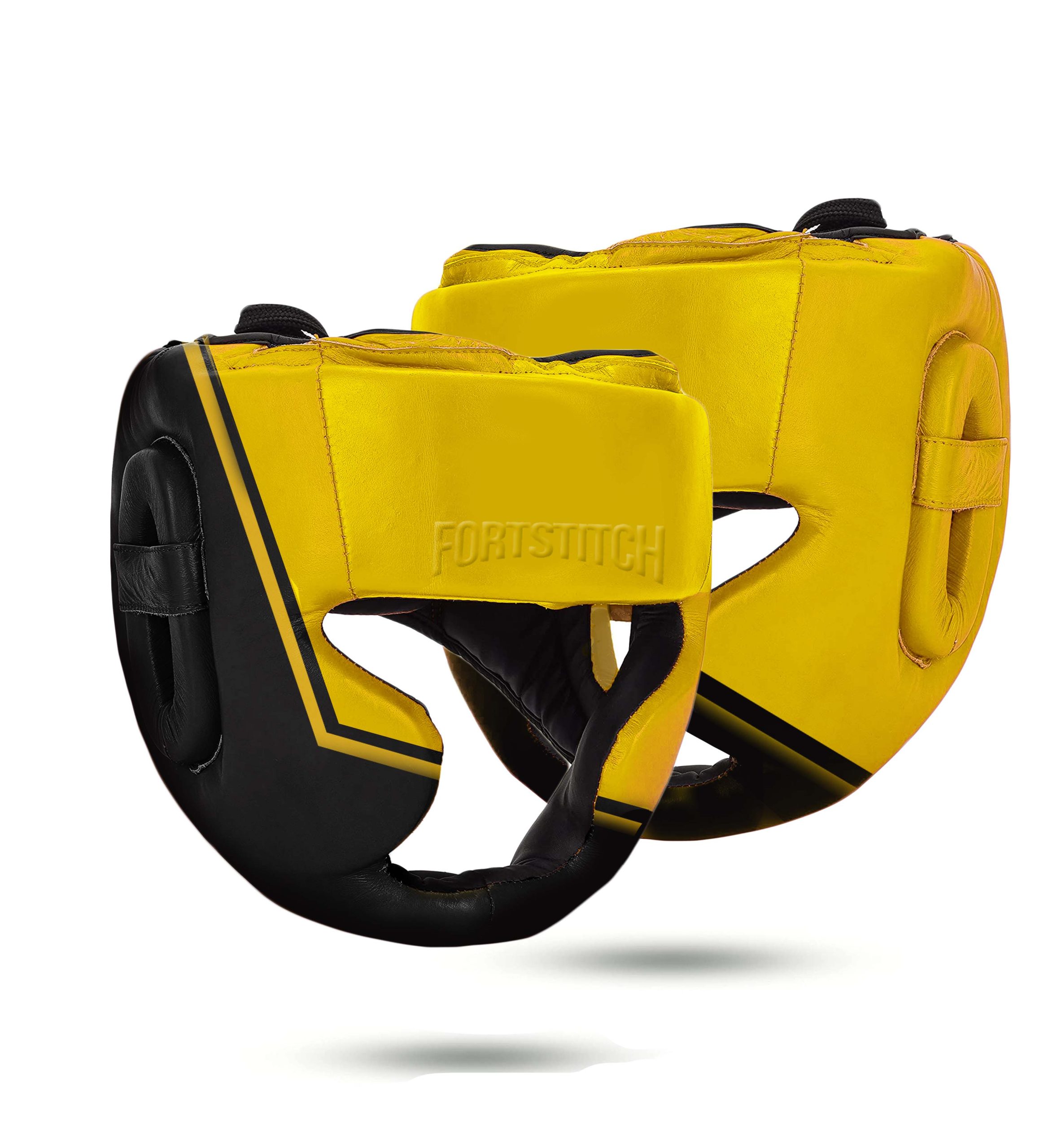
Headgear
- Prefer visibility and fit. An open-face boxing headguard gives better peripheral vision. Full-face headgear with a chin bar and cheek protection is heavier but offers more coverage.
- Leather headgear with multi-layered foam padding balances protection with durability.
Mouthguard
- A boil-and-bite mouthguard, molded, provides adequate protection for most training scenarios. Custom-fit mouthguards from a dentist offer premium protection and comfort, but at a higher cost.
- Stock a range of sizes in your gym; one size does not fit all mouths.
Groin Guard
- Standard for all levels of sparring. Look for a secure waistband and impact-absorbing cup design.
Conditioning & Footwork Tools
Jump Rope: The most cost-effective conditioning tool a boxer has. Jumping rope builds calf endurance and coordination. The light-footed rhythm translates into the ring.
- Adjustable length is critical. The rope should reach under the armpits when you stand on its center.
- Speed ropes (thin cables) are for fast footwork. Weighted ropes build shoulder and forearm endurance.
Boxing Trainer Equipment: Focus Mitts and Body Protectors
If you are a coach or planning to run a gym. Your equipment needs expand to include the gear that lets you train your fighters.
Focus Mitts
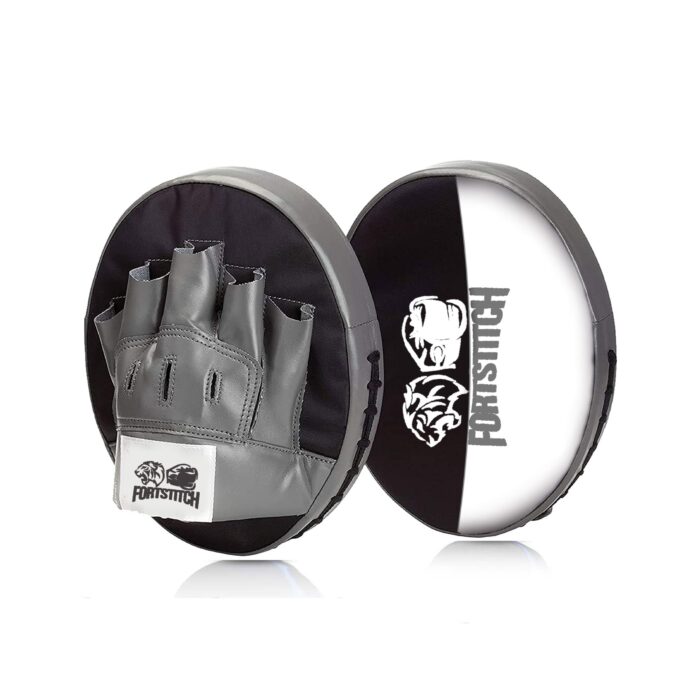
Boxing mitts that are curved fit over your hands. Padded to absorb impact. Good mitts position the striking surface so the coach does not absorb unnecessary shock.
- Leather mitts last longer and clean up easily. Mesh palms reduce sweat buildup.
Body Protector
Full body protection for boxing, worn by the coach, this padded vest absorbs body shots. So, you can drill hooks and uppercuts to the body at full speed.
- High-density foam is essential. The thin protectors transfer impact and lead to coaching injuries over time.
Now That You Know What to Look For
We are waiting with quality equipment, bulk pricing, and zero guesswork. Explore our complete range of products.
Training Setup: Choosing the Right Equipment for Your Goal
Different boxers and different environments need different gear. Here is how to approach your setup based on what you are trying to achieve.
- Boxing gloves (12oz – 14oz)
- Hand wraps (180″)
- Heavy bag (hanging or free-standing, 100lb)
- Jump rope
- Optional: Double-end bag for reflexes
- Boxing gloves (14oz general, 16oz sparring)
- Hand wraps
- Heavy bag
- Speed bag with platform
- Double-end bag
- Headgear and mouthguard (for sparring)
- Jump rope
- Boxing gloves in multiple weights (10oz–16oz)
- Bulk hand wraps (180″ standard)
- Multiple heavy bags (varying weights)
- Speed bags and double-end bags
- Headgear, mouthguards, groin guards
- Focus mitts for each coach
- Body protector
- Jump ropes (adjustable, quantity to match class)
- Boxing ring (as program grows)
This tiered approach helps you buy only what you need today while leaving a clear path to expand.
Fort Stitch Best Boxing Equipment Supplier
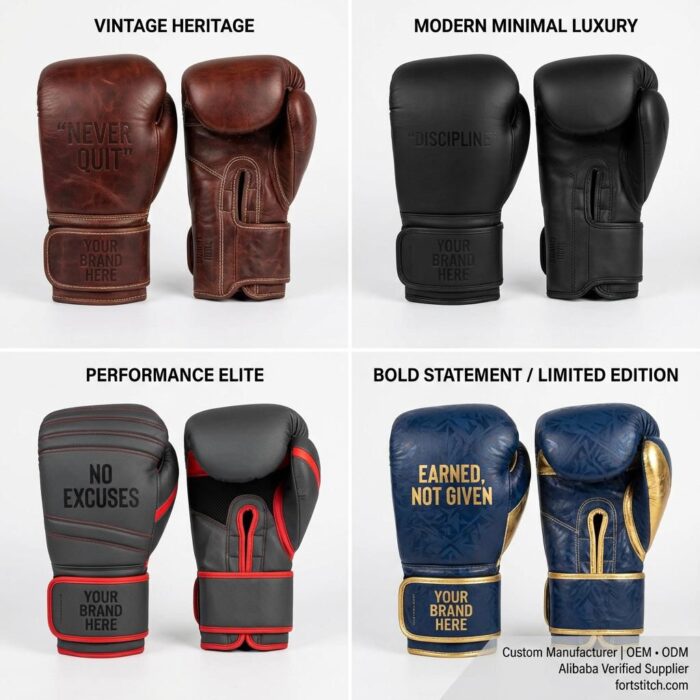
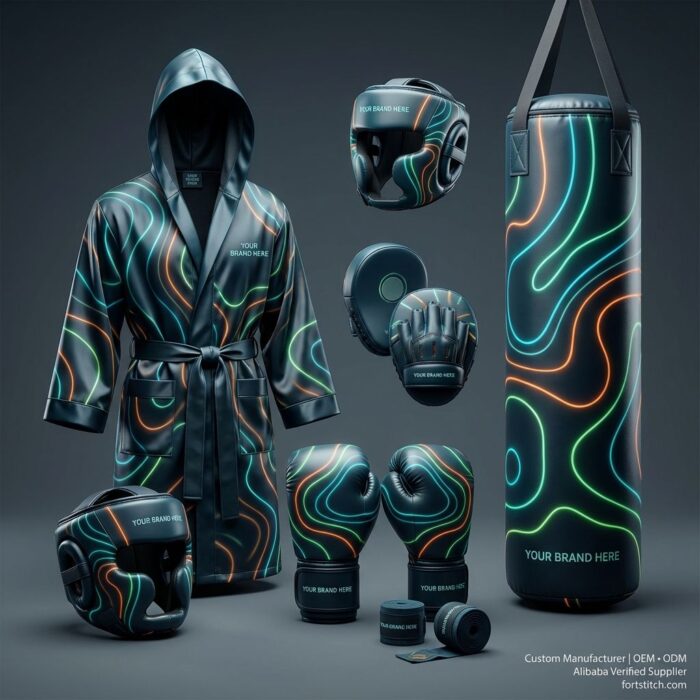
If you are looking for a good boxing equipment supplier. You need to look for both quality and value. Fort Stitch has built its reputation on trust, quality, and commitment. We have experience in working from sourcing materials to shipping goods. And from boxing equipment to accessories, everything you need. We provide full customization options for brands and private labels. And the best flexible terms for startups and small businesses. We are not a supplier selling boxing training equipment. We sell an environment for better training.
Browse Our Range or Request a Custom Quote
Our team will help you get exactly what your gym, club, or program needs. We will give you the pricing that makes sense.
Conclusion
Boxing training demands full attention and commitment. The quality and standard of your equipment must stand up to it. Well-chosen gear not only improves your training. It also reduces the risk of injury, sharpens the skills, and makes every round exemplary.
Take the time to choose the right equipment. Start with the essentials and build out as your program grows. And when you can buy in bulk, partner with a supplier who understands and you can rely on.
Frequently Asked Questions
Q1. How do I choose the right glove weight?
For bag and pad work, 10oz to 12oz. For sparring, 14oz to 16oz is standard. If you are buying one all-purpose pair, 14oz is the safest compromise. Heavier boxers should always lean toward 16oz for sparring.
Q2. Can I use MMA gloves for boxing training?
You can, but it’s not ideal. MMA gloves offer less wrist support and padding, which increases injury risk during heavy bag sessions and partner drills. Stick with traditional boxing gloves for boxing-specific training.
Q3. How often should I replace boxing gloves?
With regular use, expect to replace gloves every 12 to 18 months. Warning signs: flattened padding, tears in the lining, persistent odor that cleaning cannot remove, or Velcro that no longer secures properly. Gyms with high daily usage often rotate gloves out closer to the 8–12 month mark.
Q4. Why order bulk instead of buying as needed?
Because bulk ordering saves money immediately and saves time throughout the year. You’ll avoid running out of essential items mid-season, and you will have consistent gear across your entire program.
Q5. How do I care for my boxing equipment?
Wipe down gloves and headgear after every session with a clean cloth and mild disinfectant. Air dry completely — never leave gear in a closed bag. Wash hand wraps weekly. Condition leather items every few months to prevent cracking.